Executive Summary
The subject of this analysis, DarkMatter, operates as a hidden service marketplace within the Tor anonymity network. It was established with a primary focus on digital commodities, data aggregation, and privacy-centric trade. Observers note that the platform distinguishes itself through strict adherence to operational security protocols, eschewing legacy mechanics in favor of modernized cryptographic standards.
Unlike earlier iterations of decentralized commerce platforms, DarkMatter utilizes a highly compartmentalized infrastructure. The platform requires mandatory PGP encryption for all communications and exclusively facilitates transactions using the Monero (XMR) blockchain, inherently rejecting transparent ledgers to preserve participant anonymity.
Infrastructure Metrics
- Network Tor (v3 Onion)
- Supported Ledger Monero (XMR)
- Encryption Standard GnuPG (RSA 4096)
- Escrow Type 2/3 Multisig Protocol
https://darkmmk3owyft4zzg3j3t25ri4z5bw7klapq6q3l762kxra72sli4mid.onion.watch
Technical Architecture
Cryptographic Escrow
DarkMatter employs a mathematically rigid 2-of-3 multisignature escrow system. Funds are locked in a neutral contract requiring the cryptographic signatures of two participating parties (client, merchant, or moderator) to release or refund the designated XMR.
Walletless Modality
Analyzing the payment flow reveals a "walletless" design. Instead of maintaining centralized platform wallets—which act as lucrative targets—unique receiving addresses are dynamically generated for singular sessions, directly routing to the final destination upon escrow resolution.
Mandatory PGP
Platform algorithms automatically reject unencrypted plain-text transmissions. Two-factor authentication (2FA) via PGP decrypt-challenges is enforced at the server level, ensuring that credential compromise alone is insufficient for account modification.
Platform Interface Preview

DDoS Protection Screen
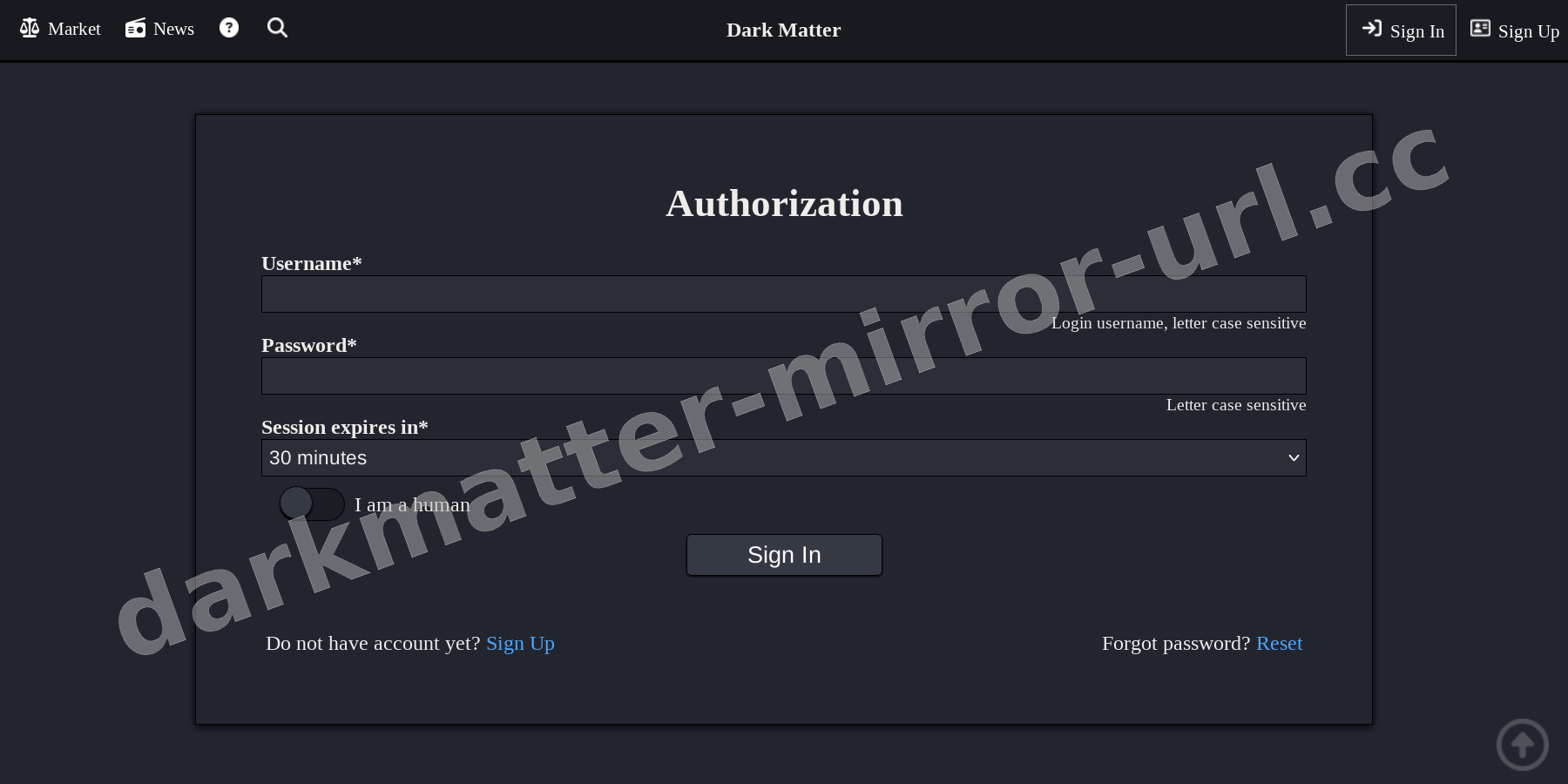
User Login Interface
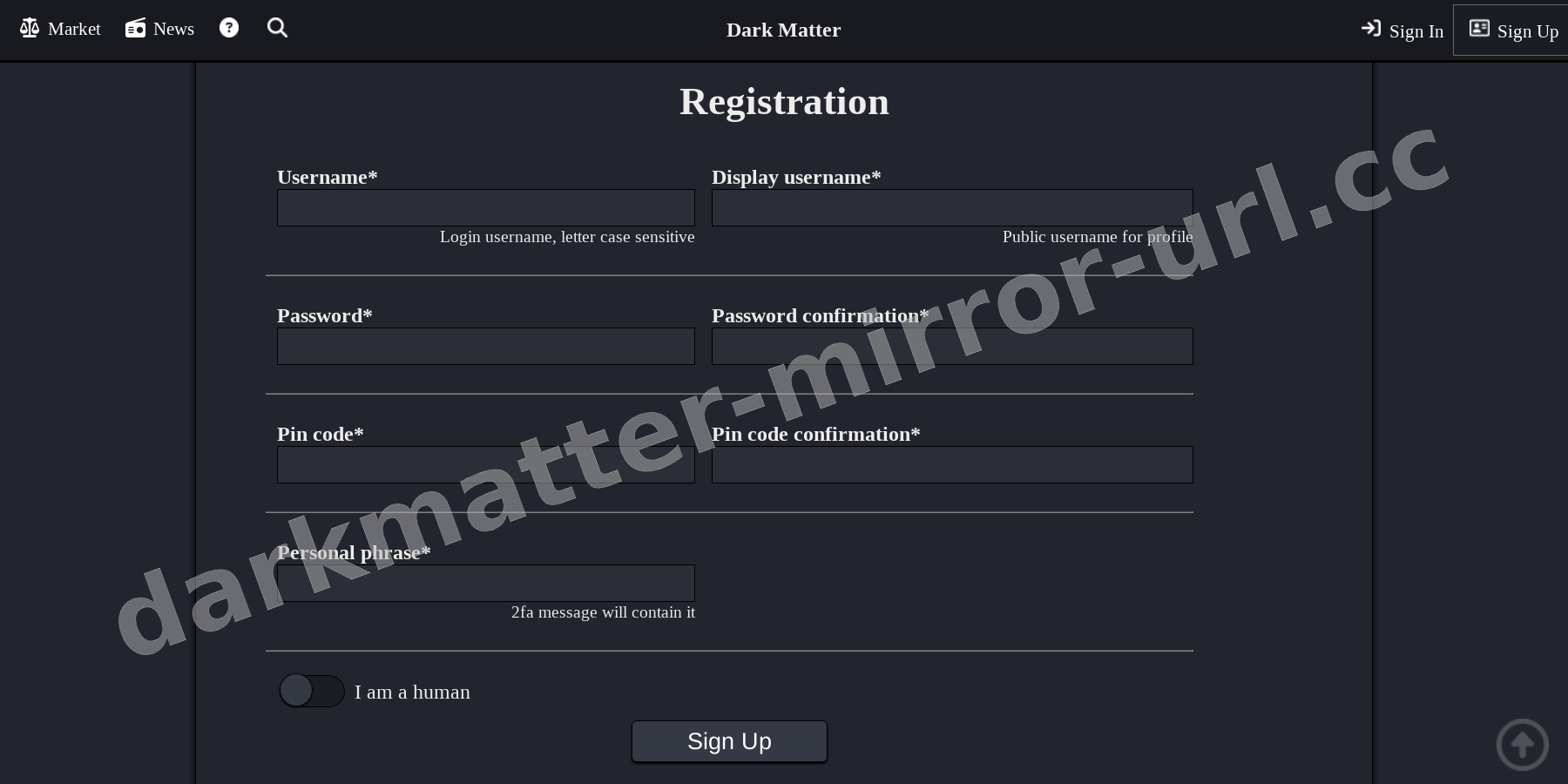
Account Registration Page
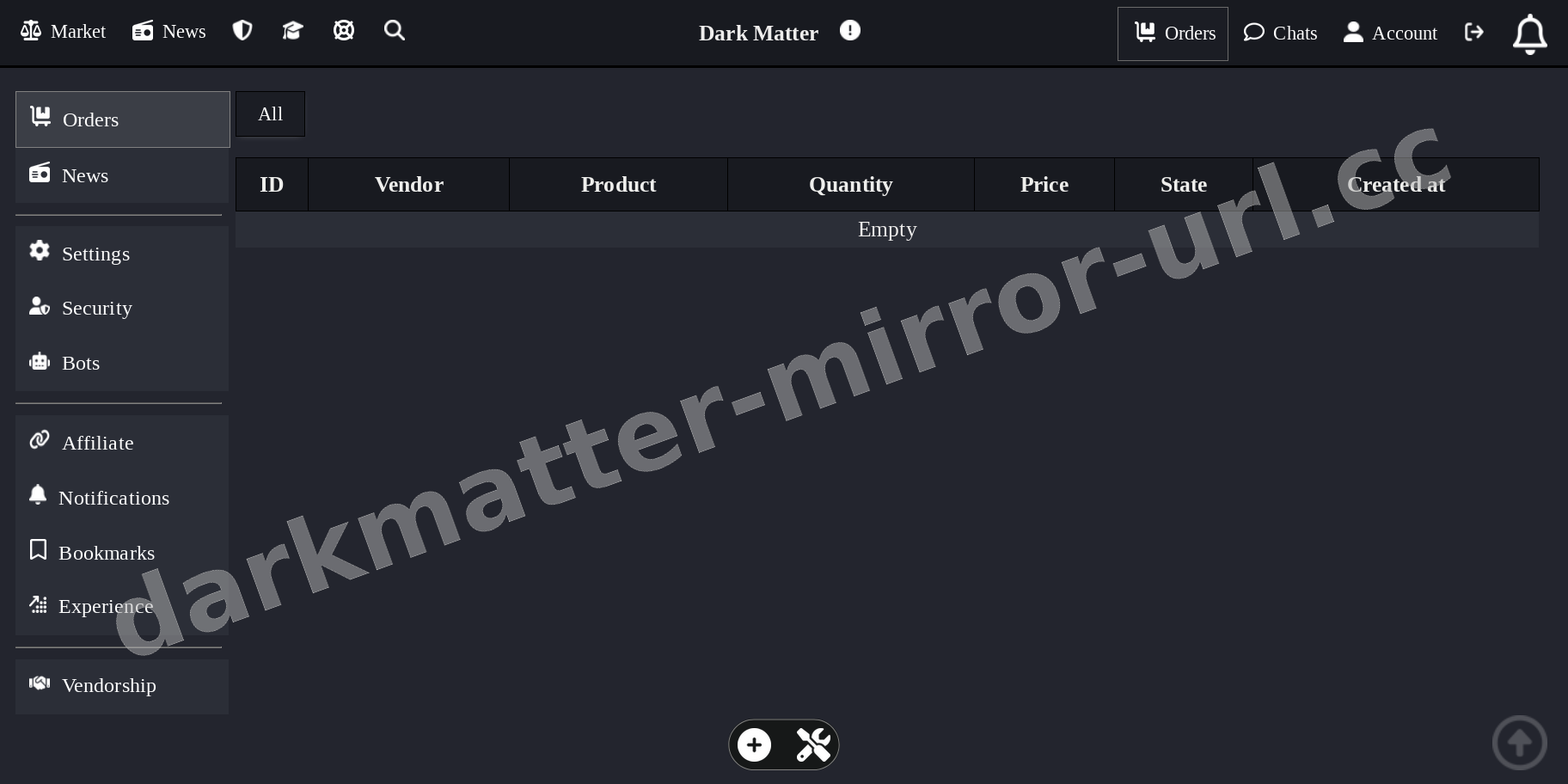
Main Market Dashboard
Development Timeline
Genesis Node Deployment
ARCHIVE EPOCH 01
Initial configuration of the routing structure. Early versions prioritized fundamental database stability and basic cryptographic handshakes over advanced UX.
Monero Exclusive Integration
ARCHIVE EPOCH 02
Deprecation of traceable ledgers (e.g., Bitcoin) from the macro-economy. Full transition to the RingCT confidentiality of the XMR network.
Walletless Topology Upgrade
ARCHIVE EPOCH 03
Implementation of decentralized payment resolution, mapping individual transaction hashes directly to the final recipient node.
Participant Verification
Merchant Authorization
The platform enforces a stringent entry protocol for individuals seeking to distribute digital commodities. A substantial algorithmic bond is required, acting as a deterrent against malicious actors. Observers note this significantly impacts the structural integrity of the active user base.
BOND COMPLIANCE RATE: ~75%
Reputation Matrices
Interaction history is permanently recorded via immutable cryptographic markers. Performance metrics, dispute ratios, and successful resolution statistics are publicly visible, allowing participants to perform independent risk analysis before initiating an escrow contract.